


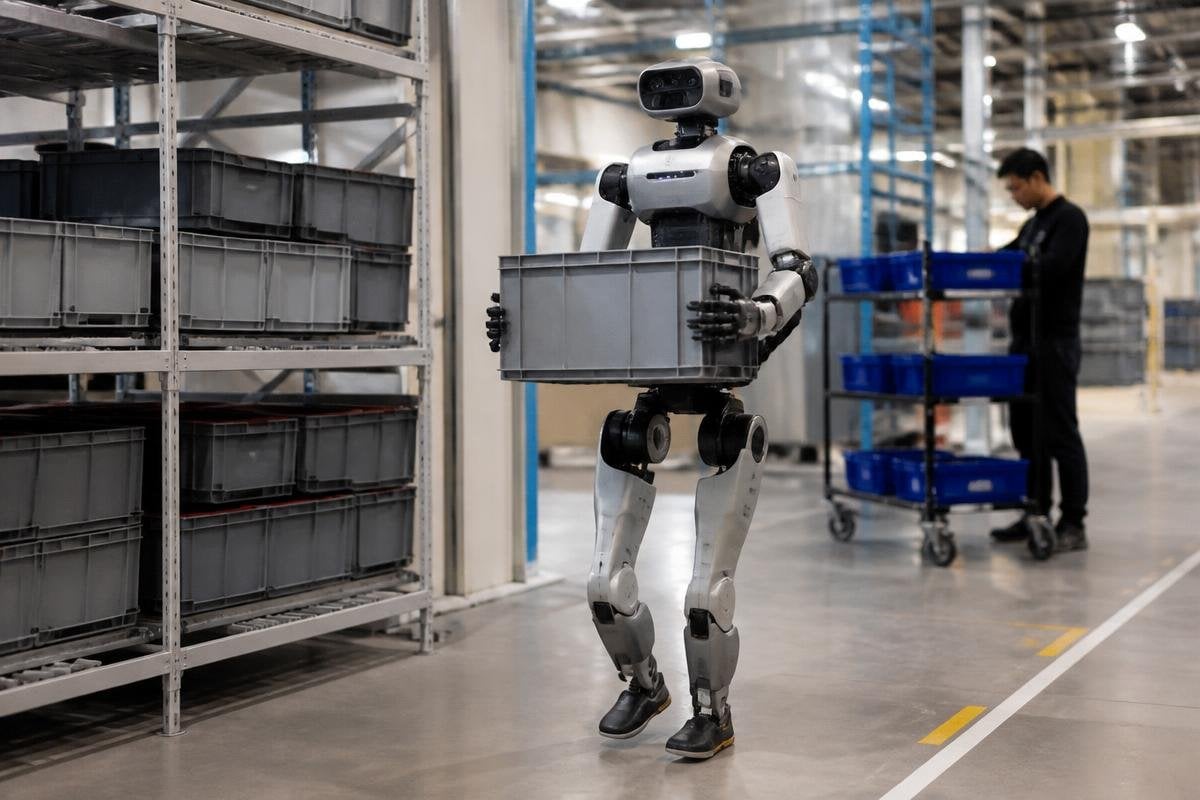
A humanoid robot doesn’t need a human face, skin, or voice to work around people. Its body should match the tasks, tools, and safety rules of the place where it will run.
- Human-shaped hands help when the robot uses tools made for people.
- A visible status display can tell nearby workers what the robot plans to do.
- A realistic face adds cost and social pressure without fixing most work tasks.
Start with the work
The right shape comes from the job. A robot that carries bins through a warehouse needs stable legs, a useful reach, clear sensors, and enough battery for its work period.
For valve checks in a plant, the robot may need a smaller body, sealed joints, and a camera placed above its hands.
That makes the human form a starting point, not a rule. People build rooms, doors, stairs, tools, and control panels around the human body. Matching those dimensions can save changes to the site and let the robot handle equipment already in use.
The fit has limits. Human arms have a wide range of motion, but a robot may need room around its joints, cable routes, cooling parts, and safety covers. A body that looks right from the front can still fail when it turns, reaches overhead, or works beside a fixed machine.
What should look human
Hands and reach often deserve the closest match. A robot may need to turn a handle, press a button, carry a box, or place a part in a jig. Human-sized fingers can help in those settings, though they also bring small motors, delicate joints, and more points of failure.
The torso can follow human dimensions when the robot must use shelves or workbenches built for people. Its chest does not need muscles or skin. A flat panel with lights, cameras, and a small display may tell a worker more than a molded body ever could.
The head needs a clear purpose. Cameras placed near eye height can show where the robot is looking, which helps a nearby worker predict its next move. A screen can display a stop state, a fault, or a request for help. A face that appears to watch people may create the wrong expectation about what the robot understands.
A human-looking head can affect how a worker reads the robot’s next move, so its design needs evidence from real tests. Humanoid robot design reports can place the face, sensors, and screen behavior beside the task and setting where people must respond.
Where human looks cause trouble
A human outline can make people assume human judgment. That assumption matters when the robot moves near a worker, handles a sharp part, or stops during a fault. Clear lights, sound signals, and a visible emergency stop can set better expectations than realistic eyes.
The outer shell also needs to protect the hardware. Soft covers may reduce injury risk during contact, but they can trap heat, tear on corners, or make inspection harder. Exposed metal may be easier to service while giving the robot a colder appearance. The right choice depends on the contact risk and the repair plan.
Movement shapes the impression too. A robot with human proportions does not need to copy human speed or gestures. Slow, predictable motion may be safer near people, while a compact arm or wheeled base may work better in a narrow area. I’d choose a plain, readable body over a lifelike one for most industrial jobs.
A practical design check
Use this checklist before choosing a human-like form:
- Name the task: write down the tools, objects, reach height, and floor space the robot must handle.
- Check the site: measure doors, aisles, shelves, work surfaces, and the places where people stand.
- Mark the signals: decide how the robot shows motion, a stop, a fault, and a request for help.
- Plan service access: leave room to reach batteries, motors, sensors, covers, and emergency controls.
- Test the expectation: ask workers what they think the robot can understand from its face, voice, and movement.
This check separates useful human dimensions from decoration. It also exposes a cost that a product image hides: every extra joint, cover, screen, and sensor needs power, software, service time, or training.
The shape that earns trust
A humanoid robot should look familiar where familiar dimensions help it use human spaces and tools. The rest of its body should show what it can sense, how it will move, and when it needs a person.
The next design test is simple: place the robot beside the real equipment, then ask workers to predict its next action from its body and signals alone. If they can do that without mistaking it for a person, the shape is doing its job.
